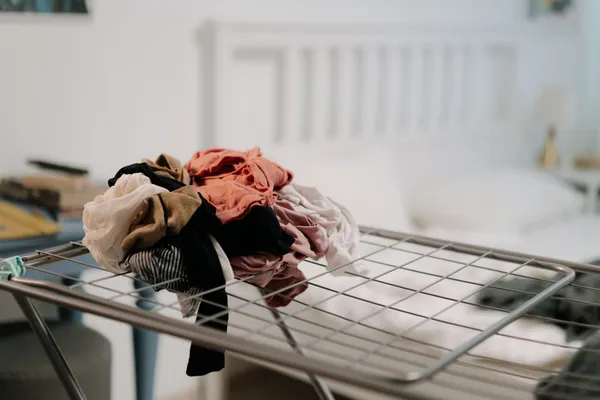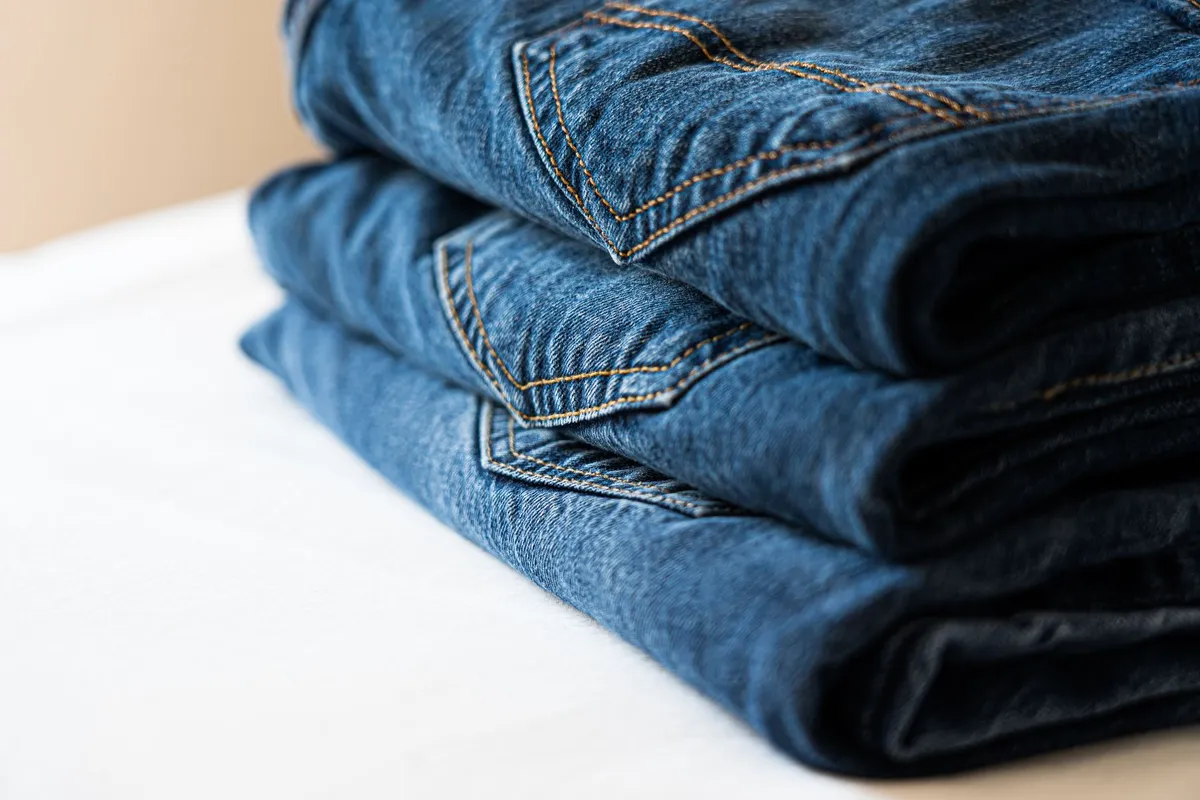
It is 10 p.m. and you are digging through four clean loads on the spare bed for one pair of socks, like a raccoon in a very tidy dumpster. The washing machine did its job perfectly. The last step of the job is still lying there.
Nothing in that room is dirty, which is the strange part. It is an inventory problem. Somewhere in the soft gray mountain range is the T-shirt you want, and finding it means lifting whole geological layers and setting them down slightly to the left. Every night the pile gets shuffled and every night it gets a little less folded, until the clean clothes and the maybe-worn-once clothes blend into one ambiguous mass with no memory of its own history.
The spare bed has become a warehouse. A guilt-shaped warehouse with a duvet.
No spare bed? Then you know the local equivalent. The armchair nobody sits in. The basket by the couch that has been “about to be dealt with” since spring. It is a cousin of the chair where worn clothes wait for a verdict, except that the chair pile at least has an excuse. The chair pile is undecided. The laundry pile is finished work that never got filed.
Laundry is three jobs wearing one word
Job one: put dirty clothes in the machine. Easy. The hamper is overflowing and the situation nags.
Job two: move the wet clothes to the dryer or the rack. Also fine, because a machine beeped at you. A literal alarm goes off in your house to say it is time. That is more accountability than most life goals get.
Job three: put the clean clothes away. Job three has nothing. No beep. No timer. No wet-clothes-going-sour deadline. Nothing goes wrong if you skip it. The clothes are clean, they are accessible in a slumped horizontal way, and the world continues.
That missing beep matters more than it sounds. Psychologists who study routines define a habit as an action triggered automatically by a cue in the surroundings, the way a seatbelt goes on after you get into the car. The definition comes from a short guide to habit formation written for family doctors, and its advice is nearly all about the cue: pick a moment that already turns up reliably in your day, and do the new thing every time that moment arrives.
Jobs one and two come with cues built in. Job three has to be given one, or it runs on spontaneous enthusiasm for folding, which is not a renewable resource.
There is a reason to care beyond the socks. In a study of 60 spouses from dual-income couples who gave researchers self-guided tours of their homes, the wives whose descriptions leaned on words about clutter and things left unfinished had a flatter daily cortisol pattern, a profile associated with poorer health, and their mood dipped further as the day went on. It was a small study and a correlation, so it cannot say the mess caused the mood. Still, “unfinished” is the exact word for a load that is washed, dried and living on a bed.
Where the cue goes matters
So attach job three to something. But to what, and on which side of it?
One small experiment gets surprisingly specific. Researchers asked 50 people to take up flossing, half of them before brushing their teeth and half after. The after-brushing group tended to form the stronger habit, and at a follow-up eight months later they were still flossing more often. The authors call their own study exploratory, and teeth are not T-shirts. The logic carries over, though. The end of something you already do is a clean handoff. “After” has an edge. “Before” is negotiable.
Which means the usual plan, folding in the ten minutes before your show starts, has it slightly backward. The basket gets its turn after something: after the kettle goes on, after the dinner plates are in the dishwasher, after the kids are in bed.
The same guide for doctors adds two details worth stealing. Simple actions became automatic faster than elaborate routines, and missing an occasional day did not derail the process. Both are arguments for making job three as small and as unceremonious as possible. It is the same reason making the bed sticks when it is the lazy version and collapses when it involves decorative cushions.
A load is not done until it is in a drawer
Nobody has run a trial on laundry baskets. What follows is the research on cues and small actions, applied to one:
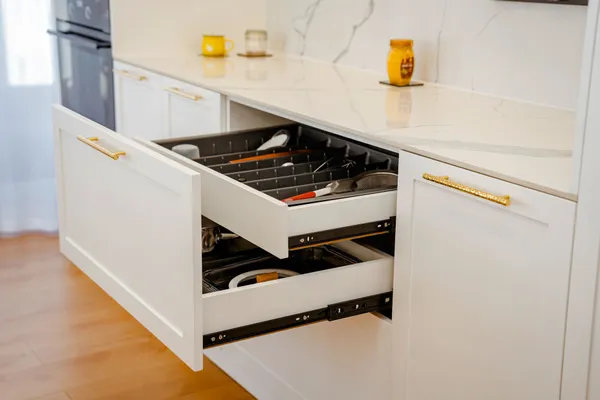
- Change the definition of done. A load is finished when it is in a drawer, not when it is dry. Until then it is still open, the same way an email you have read but not answered is not handled. It has just moved.
- Give the basket a cue with “after” in it. “After the kettle goes on, the basket gets emptied.” Same moment, every time.
- Wash less at once. The heroic weekend of five loads produces an Everest of clean fabric that no human will put away in one sitting. One load is small enough to finish while the tea steeps. Time it once; the number is usually smaller than the dread.
- No new load while the last one is homeless. If you want clean towels, the shirts go in the closet first. The clothes you want in the future are held hostage by the clothes you own now.
- Stop folding what nobody sees. Socks, underwear and pajamas can be thrown in a drawer. Folding makes the work look serious, and serious work gets postponed.
That last rule is the one people resist, because a drawer of unfolded socks feels like cheating. It is cheating. Systems that look impressive tend to collapse exactly when you are tired, which is when you need them.
Try it tonight with one basket, the most annoying one, and one drawer. No sorting, no reorganizing while you are in there. Put the clothes where the clothes go and leave the room.
The side effect is bigger than a basket deserves. An empty spare bed changes the feel of a whole house. A room that has been avoided for months becomes a room again, even if nobody is coming to stay. It simply stops being a monument to work that was almost finished.
The washing was never the problem. The last few minutes were.
Finish one laundry load into the drawer
- A load is done when it's in a drawer, not when it's dry
- Pick an "after" cue: after the kettle goes on, the basket gets emptied
- No new load while the last one is still homeless
- Don't fold socks, underwear or pajamas; throw them in
It goes into your lab notebook on this device: a day counter, a daily tick and a note on how it went.
Sources
- Making health habitual: the psychology of 'habit-formation' and general practice. British Journal of General Practice, 2012
- No place like home: home tours correlate with daily patterns of mood and cortisol. Personality and Social Psychology Bulletin, 2010
- Forming a flossing habit: an exploratory study of the psychological determinants of habit formation. British Journal of Health Psychology, 2013