My friend’s dad died on a Tuesday, and by Wednesday afternoon I had sent her the sentence. “So sorry. Let me know if you need anything.” I felt better immediately, which should have been my first clue.
Months later, over the kind of dinner where you finally say the true things, she told me she got that message around forty times. She answered none of them. Not because she was angry, and not because she didn’t love the people who sent it. She just couldn’t do the thing it asked.
Because answering it required knowing what she needed. And what she needed, above everything else, was to not have to know anything.
Here is the part I’ve thought about ever since. Every one of those messages was kind. Every single one. And collectively they formed a to-do list that landed in the lap of the one person in the county with no capacity to do a single item on it. Forty small tasks, all phrased as gifts.
Grief does something strange to decision-making. It takes the part of your brain that picks a sandwich and puts it in a drawer somewhere. My friend said she stood in her kitchen one evening holding a kettle and could not work out whether she was filling it or emptying it. And into that kitchen, ping, ping, ping: what do you need, what can I do, let me know.
The rotisserie chicken that changed how I do this
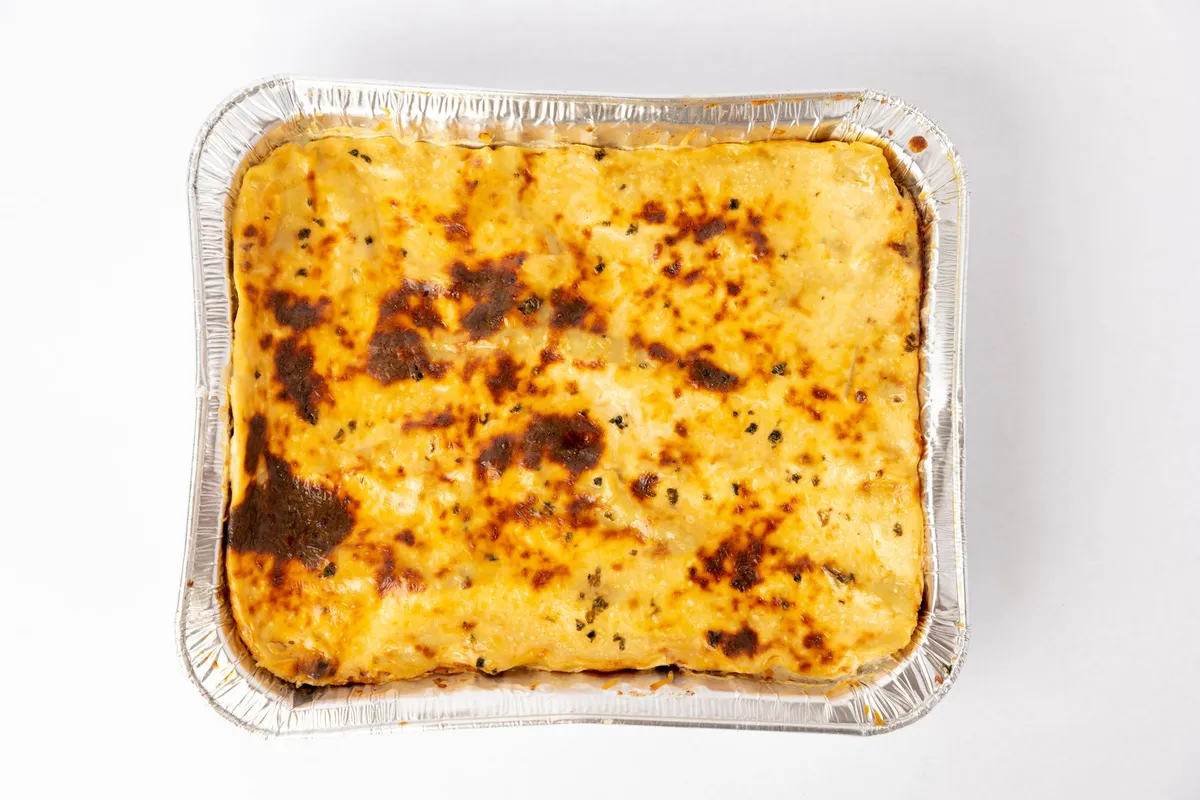
One person didn’t ask. A woman from her dad’s old bowling club, someone she barely knew, drove over, put a supermarket rotisserie chicken and a bag of bread rolls on the doorstep, rang the bell once, and left before the door opened. There was a note. It said something like: this is dinner, you don’t have to call me.
That’s the one she remembers. Out of forty messages and a mountain of flowers, the thing that stayed was a hot chicken in a plastic dome and permission not to respond.
I used to think the generous move was to offer everything. Open-ended, no limits, whatever you need, truly anything. It felt bigger. It felt like I was putting my whole self on the table. What I’ve slowly understood is that “anything” isn’t an offer, it’s a job interview. You’re asking someone to assess their own situation, identify a gap, match it to your skills and availability, and then advocate for themselves, all while feeling like a burden.
Nobody is doing that. Certainly not at 9 p.m. on the day of the funeral.
“I’m at the shop, do you want anything” is a different kind of sentence entirely. It costs almost nothing to answer. Yes, milk. No, we’re fine. Either response takes four seconds and doesn’t require anyone to have a plan. The generosity is the same. The weight is on me instead of her, which is the whole point, because I’ve got weight to spare and she doesn’t.
Specific is not smaller than general. Specific is the only version that actually arrives.
What I say now, and the part where I shut up
So I changed three things, and they’ve held up through a divorce, two redundancies, a miscarriage I still don’t know how to write about, and one very long hospital stretch.
First, I offer one concrete thing. Not a menu. One. I’m dropping off dinner Thursday around six. I can take the kids Saturday morning. I’m free to sit on your sofa and say nothing on Sunday. Naming the thing means the other person only has to react, and reacting is about a tenth of the effort of deciding.
Second, I build in the exit. “No reply needed if it’s not a good day” or “just say no, I genuinely won’t be offended, I’m buying the chicken either way.” People turn down help partly because saying no feels like a confrontation. If you hand them the no in advance, wrapped and easy, they’ll sometimes surprise you and say yes.
Third, and this is the one that took me longest: I stopped needing to be thanked. If I drop off soup and hear nothing for three weeks, that’s fine. That’s a success, actually. The soup was the point. The soup was not a message that required a response, and the moment I start feeling a little unappreciated is the moment I’ve made someone else’s worst month partly about me. I’ve done that. It’s not a good look from the inside either.
Silence counts as an answer. Sometimes it’s yes and they’re too flattened to type. Sometimes it’s no and they don’t want to explain. Either way I don’t follow up asking if they got it, because “did you get my message” is just the original burden with a second invoice attached.
The one exception: if it’s been a while and things have gone quiet in the way that worries you, you can send something that asks for nothing at all. Thinking about you today, no reply needed. That’s not a task. That’s a hand on a shoulder. It’s also how you stay in touch with the friend you keep meaning to text before anything bad happens, which is its own separate guilt.
And if you got this wrong before, like I did, with all the sincerity in the world: that’s allowed. Most of us learned how to comfort people from television. The fix isn’t a better sentence, it’s a smaller, more specific, easier-to-refuse one. Or a chicken.
You don’t need to know what to say. You need to know what day you’re free.
Frequently asked questions
What if I don't know the person well enough to just show up?
Then keep the offer small and non-intrusive: a doorstep drop-off, a short message that says no reply needed. Closeness changes the size of the gesture, not the principle of making it specific and easy to refuse.
Is it ever okay to just ask what they need?
Yes, if you narrow it down first. "I'm at the shop, want anything?" or "Is Thursday or Saturday better for dinner?" gives them a choice instead of a blank page.
How long should I keep checking in after something bad happens?
Longer than feels natural. The messages tend to stop around week three, right when the shock wears off and it starts getting genuinely hard, so a low-pressure note a month or two later often lands hardest.
What if they turn down every offer I make?
Take the no at face value and keep offering occasionally without commentary. Some people accept nothing but remember exactly who kept asking.